The $4 Billion Lie — PayPal Honey Didn’t Just Break Trust, It Exploited an Entire Internet Economy
Published: January 2, 2026
How Honey exploited the creators who promoted it
The $4 Billion Lie — PayPal Honey Didn’t Just Break Trust, It Exploited an Entire Internet Economy
I remember the first time I realized something was deeply wrong with the PayPal Honey scandal.
It wasn’t the headlines.
It wasn’t the lawsuits.
It was the slow, sickening realization that this wasn’t a “coupon extension controversy.”
This was a betrayal engineered at scale.
Millions trusted a browser extension.
Creators promoted it.
Kids installed it.
PayPal paid $4 billion for it.
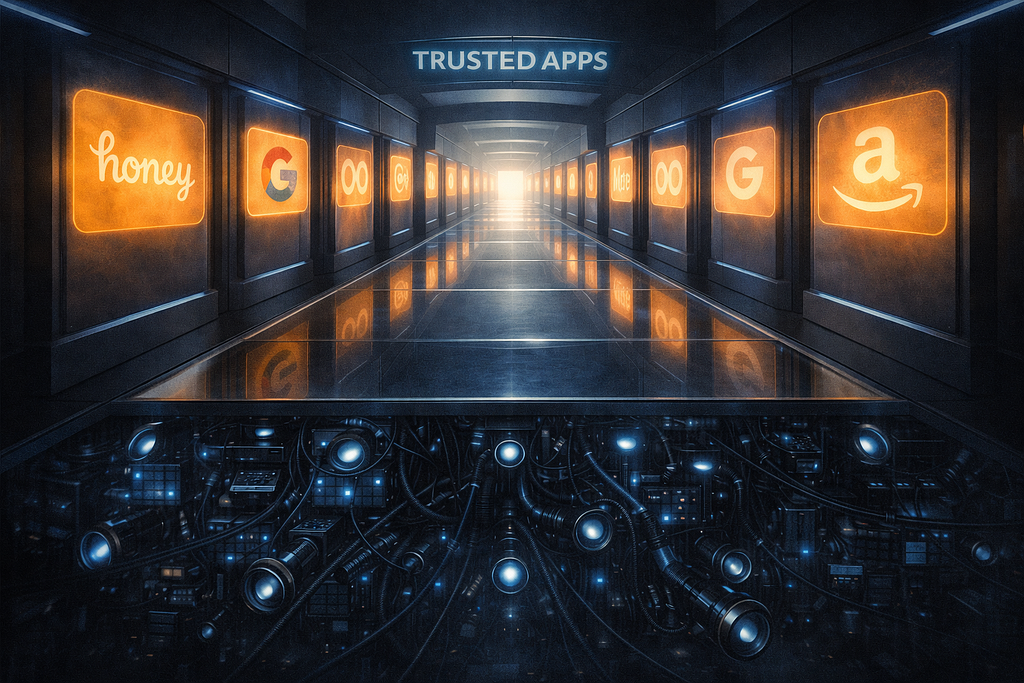
And behind the glossy “save money online” promise was a system designed to hijack affiliate revenue, manipulate consumers, harvest data, evade detection, and quietly rewrite the rules of trust on the internet.
Here’s the part most people miss:
This wasn’t accidental.
This wasn’t sloppy oversight.
This was systemic.
The First Lie: Honey Was Never Really ‘Free’
For years, I watched creators — the same creators Honey was quietly exploiting — promote the Honey browser extension as a harmless way to save money online.
But when I dug deeper into the PayPal Honey scandal, the truth didn’t look harmless at all.
Honey didn’t just “apply coupons.”
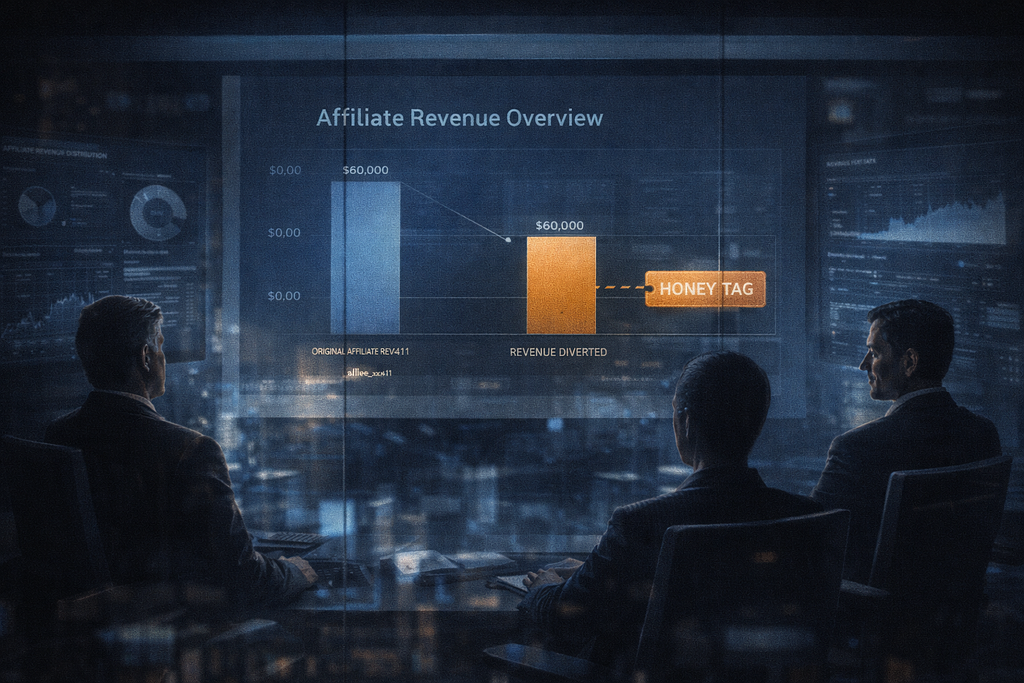
It inserted itself at checkout, even when it found no coupon codes.
And then it did something far worse.
It replaced the creator’s affiliate link with its own.
A creator convinced a viewer to buy something.
The brand agreed that the creator earned the commission.
And Honey walked in at the last second and essentially said:
“No. That money is ours now.”
This wasn’t a glitch.
This wasn’t confusion over attribution systems.
This was affiliate link hijacking — deliberate, repeatable, profitable.
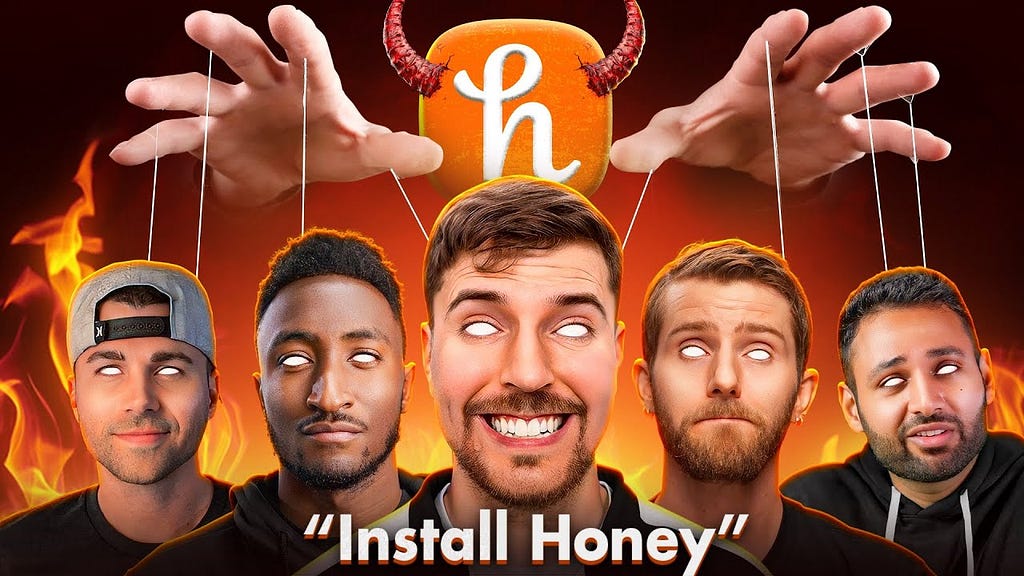
Creators like MKBHD, Linus Tech Tips, Wendover Productions, LegalEagle, MrBeast, and countless smaller channels unknowingly helped promote a tool that was silently draining their own income.
This is where it crossed the line for me:
Honey didn’t “help consumers.”
It exploited creators to build trust, then stole from them.
And PayPal bankrolled it.
The Quiet Manipulation: Showing You a Worse Deal — On Purpose
Most people install a coupon extension assuming one simple truth:
“If there’s a better discount, it will find it.”
But that’s not always what Honey did.
If a store paid Honey, it prioritized worse coupons.
If they didn’t pay, better coupons conveniently disappeared.
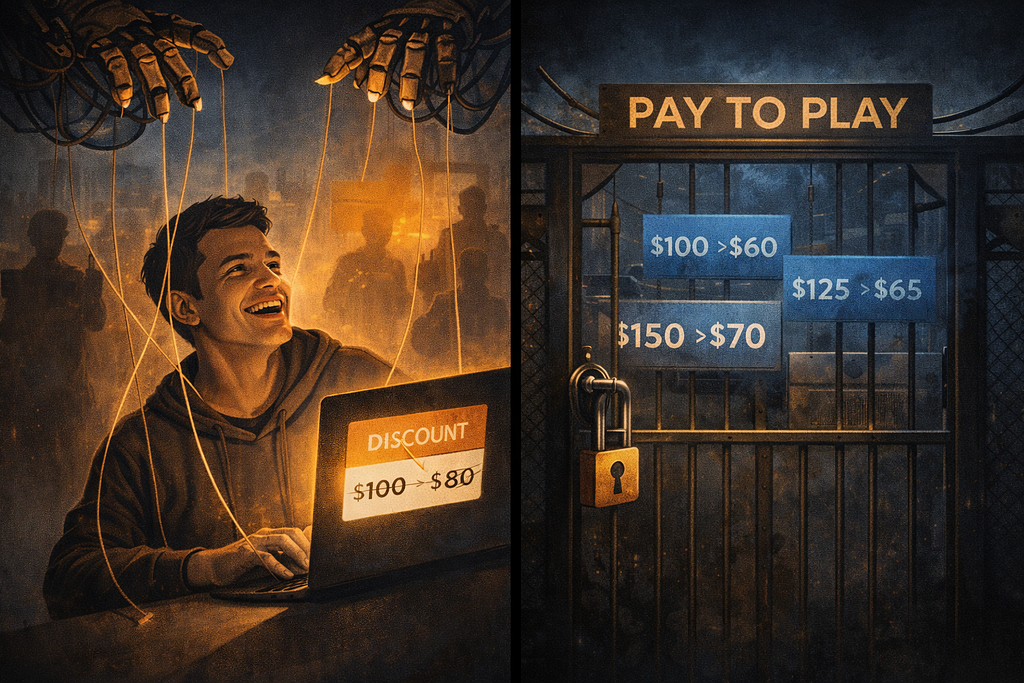
Cheaper deal available? Doesn’t matter.
Better code exists? You don’t get it.
Why?
Because Honey turned discounts into leverage and turned “partnership” into pressure.
You thought you were “saving.”
But Honey was monetizing your trust.
And this is when I realized something darker:
This wasn’t about generosity.
This was about control.
Honey positioned itself between merchants and consumers, then monetized the chokehold.
The Dieselgate Moment — The Part They Never Expected to Be Found
Here’s where the story shifts from “corporate greed” to “engineered deception.”
Harvard researcher Ben Edelman and YouTuber MegaLag uncovered something chilling:
Honey had a tester-detection system.
Just like Volkswagen Dieselgate, Honey behaved perfectly when it knew it was being examined — and went back to abusive behavior the moment the inspectors left.
It scanned for:
• affiliate compliance officers
• users logged into affiliate networks
• “test” or corporate patterns in emails
• suspicious browsing behavior
• account age and signal profiles
If Honey suspected it was dealing with a regulator?
It followed every rule.
If it was dealing with a normal user?
The rules disappeared.
The deception wasn’t static either. Honey reportedly stored its behavior logic in remotely updated configuration files — meaning its ethics could be changed in real-time across millions of users without pushing new versions.
When I read that, I stopped thinking of Honey as a “coupon extension.”
It started to look like fraud software.
This wasn’t clumsy.
This wasn’t experimental.
This was strategic.
And someone approved it.
Scraping Private Codes — And Refusing to Stop
I wish the story stopped there.
But it didn’t.
Honey scraped private coupon codes and spread them publicly:
Employee discount codes.
Refund recovery codes.
Private creator deal links.
Even 100% off remediation codes are meant only for support cases.
Businesses begged PayPal Honey to take them down.
And Honey reportedly refused unless the company partnered with them.
Call it what you want.
But when something stops only if a company pays you?
That stops looking like “coupon aggregation.”
It starts looking like economic coercion.
Let’s Talk About Kids, Data, and the Part No One Likes to Acknowledge
Here’s the uncomfortable truth about spyware-like browser extensions:
They aren’t really about coupons.
They’re about data harvesting.
And Honey didn’t target cybersecurity channels.
It didn’t target policy analysts.
It didn’t target privacy-literate audiences.

It targeted:
Minecraft channels.
Roblox channels.
Back-to-school audiences.
Creators with incredibly young viewers — some as young as fourteen.
Why?
Because kids don’t read privacy policies.
Parents assume “free coupons” are harmless.
And behavioral data gathered early becomes incredibly powerful.
PayPal did not pay $4 billion because coupon codes are worth billions.
They paid because behavioral surveillance is worth billions.
What you browse.
What you consider buying.
What you almost buy.
What you hesitate on.
Where you shop.
How often you return.
Honey was never really about discounts.
It was about mapping human behavior — at scale.
And most people handed over that data willingly.
This Is Bigger Than PayPal Honey
Tens of millions of users.
Billions of dollars in play.
Dozens of lawsuits.
Creators realizing their income was quietly siphoned.
Google changed the Chrome Web Store policy because of this.
Microsoft shut down similar features because of this.
And yet Big Tech framed it like:
A misunderstanding.
A disagreement in affiliate systems.
A policy nuance.
No.
This wasn’t complexity.
This was incentive corruption.
Modern tech doesn’t break trust by accident.
It breaks trust by design.
Here’s the Part That Should Keep You Up at Night
PayPal Honey losing users isn’t the resolution of this story.
Because the architects of this system didn’t disappear from tech in shame.
They didn’t fade into obscurity.
They built new companies.
They raised new funding.
They’re reinventing influence and advertising with even more power.
The model didn’t die.
It evolved.
And that’s the realization that reframed this scandal permanently for me:
This was never about coupons.
This was never about discount tools.
This was never just about one extension.
This was a case study in how Big Tech normalizes betrayal until we stop recognizing betrayal at all.
What This Scandal Really Means
If a beloved browser extension can manipulate purchases…
If a PayPal-owned product can quietly override creator income…
If software can detect regulators and “pretend to be ethical” on command…
If data collection can hide behind “helpfulness”…
Then the problem isn’t Honey.
The problem is the business model of the modern internet.
Where surveillance is innovation.
Where manipulation is optimization.
Where trust is a resource to be mined.
This wasn’t an accident.
This was engineered.
And No — This Isn’t Over
The lawsuits continue.
Governments are only now beginning to understand what this really was.
Creators are still discovering how much vanished income they never saw.
Millions still have spyware-like browser extensions installed.
Meanwhile?
Big Tech has already moved on to the next trick.
So when people ask why the PayPal Honey scandal matters now, I tell them this:
Because this was the warning shot.
Because “free” keeps getting more dangerous.
Because the next betrayal won’t look like coupons.
It will look helpful.
Convenient.
Trusted.
Just like Honey did.
Until it didn’t.
We weren’t blindsided.
We were conditioned not to see it coming.
And that might be the most dangerous part.

