DeepSeek Didn’t Just Update a Paper, They Fired a Shot at the Entire AI Industry
Published: January 20, 2026
The most shocking part wasn’t the 64 new pages.
I first heard the rumor on a quiet Saturday morning:
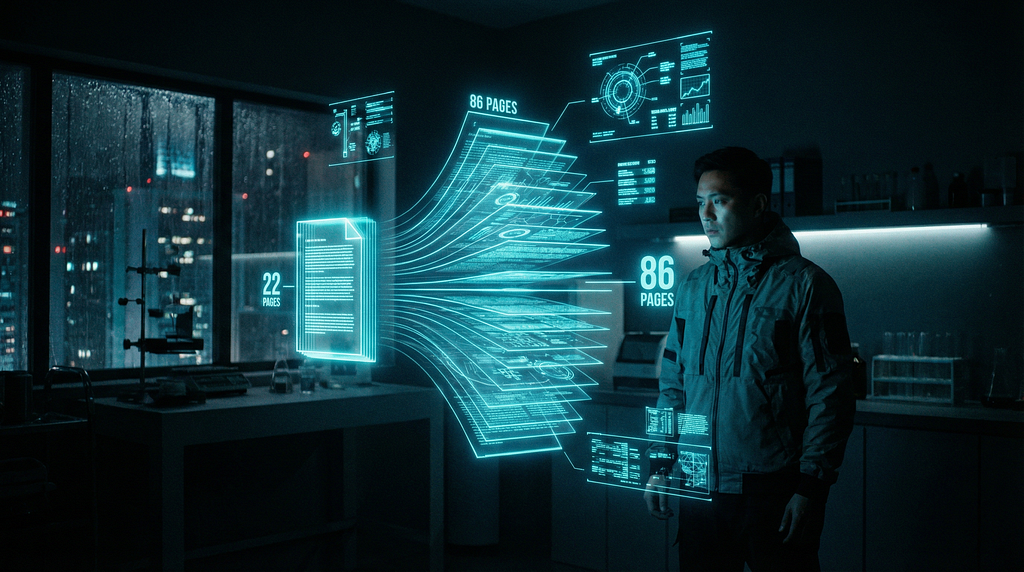
“DeepSeek updated the R1 paper. No announcement. Just… 86 pages.”
At first, it sounded like nothing. Research labs update papers all the time.
Then I opened the PDF.
The paper hadn’t been updated.
It had been rewritten, expanded, dissected, and practically open-sourced.
It went from a 22-page summary to an 86-page blueprint.
And the moment I saw it, I realized something I’ve learned the hard way from years of building real systems:
When an engineering team triples the paper and says nothing, it means they’re not documenting the past. They’re preparing the battlefield.
This wasn’t an academic update.
This was a warning shot.
The Quietest 64 Pages in AI History
On January 4, 2026, DeepSeek pushed “v2” of the R1 paper to arXiv.
No blog post.
No tweet.
No CEO victory lap.

Just a silent version bump — and a research paper that suddenly reads like a graduate seminar, a training log, and a debugging journal combined.
Anyone who has worked close to real training pipelines knows this level of disclosure is unheard of. AI papers are usually sanitized marketing artifacts. You only get the final results, the curated graphs, the PR-safe story.
But this update included:
- Full breakdown of Dev1 → Dev2 → Dev3
- Training pipeline diagrams that most labs treat as trade secrets
- Reinforcement learning mechanics described at a level that lets you reproduce them
- Benchmark tables so detailed they feel like internal dashboards
Normally, the ugly parts — the failures, the blind alleys, the “why we did X instead of Y” — never see daylight.
DeepSeek published all of it.
And here’s the part almost everyone is missing:
The only reason to show this much is if you’re confident you can still outrun anyone who copies you.
Open is only a threat when you’re slow.
DeepSeek clearly believes they’re not.
The Breakthrough Hiding in Plain Sight
Buried inside the expanded paper is the line that should make every AI lab executive lose sleep:
“R1’s reasoning abilities emerged purely from reinforcement learning. No human-annotated reasoning data was used.”
Anyone who has worked on large models knows how radical this is.
For the last five years, the entire industry operated on a shared assumption:
Great reasoning requires massive, expensive human-labeled traces.
DeepSeek just set that assumption on fire.

In the updated paper, they showed:
- AIME 2024 accuracy jumping from 15.6% → 77.9%
- Multi-step chain-of-thought emerging without supervised labels
- The model evolving its own strategies over time
- Self-reflection and verification appearing as behaviors, not training targets
This is the part where I have to pause and acknowledge reality:
If you can get this kind of reasoning through pure RL — without a mountain of human annotation — you’re no longer playing in the same cost structure as OpenAI, Anthropic, or Google.
You’ve broken the economic moat.
The 22-to-86 Page Jump Isn’t About Openness — It’s About Power
People keep calling this “radical transparency.”

But in my experience, when a team dumps this much internal detail, it’s not altruism.
It’s strategy.
Think about what this update actually does:
1. It destroys the secrecy advantage of Western labs
By publishing the pipeline, the diagrams, the RL schedules, the failure modes — DeepSeek turned their research into a public asset.
Competitors can’t hand-wave.
They can’t bluff.
They can’t hide behind “proprietary magic.”
Now everyone knows what’s possible.
2. It embarrasses every lab still pretending openness is dangerous
If DeepSeek can reproduce GPT-4/o1-level reasoning with:
- fewer resources
- fewer restrictions
- and fully open research
Then what exactly is the justification for secrecy?
Safety?
National security?
Too powerful?
DeepSeek just made those arguments look self-serving.
3. It reframes China’s role in AI entirely
The West built a narrative:
China copies, the West innovates.
DeepSeek just reversed it — by releasing a paper more open than anything OpenAI, Google, or Anthropic have ever published.
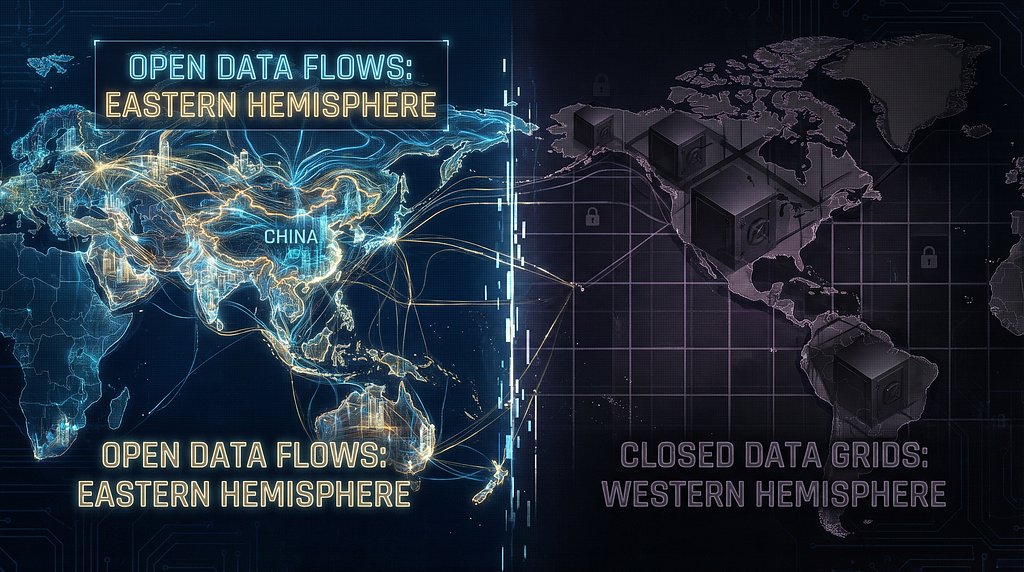
I’ve spent years in rooms where research leads debate whether to share even a single training curve. Seeing 86 pages of internals from a Chinese lab? It’s something no one in Silicon Valley expected.
The Technical Core: What Changed in Those 64 New Pages

Let me break it down like someone who has actually built and shipped ML systems.
1. Full Training Pipeline Disclosure
Most labs share a block diagram.
DeepSeek shared something more like a postmortem, complete with:
- RL schedule
- environment setup
- curriculum evolution
- step-by-step reasoning examples
- intermediate checkpoint behavior
This is what real engineers use to reproduce results — and what labs normally hide.
2. Benchmarking Across 20+ Tasks
They didn’t cherry-pick results.
They included:
- MMLU
- DROP
- GPQA
- AIME
- Chatbot Arena-style head-to-heads
The surprising part?
R1 matched or exceeded OpenAI’s o1 on several reasoning benchmarks.
That’s not normal.
Academic papers don’t usually show results this flattering without PR amplification. DeepSeek just put it in a PDF and walked away.
3. The Self-Evolution Mechanism
This is the most fascinating part for practitioners.
The paper describes how R1:
- evaluates its own step-by-step reasoning
- flags inconsistencies
- revises its own strategy
- improves solution paths over time
It’s not that the model is “self-aware” — it’s that the RL environment incentivizes the behaviors we normally rely on humans to demonstrate.
Anyone who has tuned RLHF pipelines knows how big of a shift this is.
It cuts out entire layers of expensive human supervision.
And if you can do that?
You break the billion-dollar training paradigm.
The Timing Gives Away the Real Story
Most people haven’t noticed the dates.
- January 20: R1’s one-year anniversary
- February 17: Lunar New Year
- Historically, DeepSeek drops major releases during the Spring Festival window
You don’t expand a paper 4× without a reason.
This update feels like the prelude.
A clearing of the runway.
A “before we show you the next model, here’s how the last one actually works.”
If you’ve ever shipped a massive upgrade, you know this energy.
This is the documentation you release right before you release something bigger.
The Cost Narrative Is the Real Earthquake
Here’s the uncomfortable truth:
If DeepSeek can produce GPT-4/o1-level reasoning without billions in training cost, the entire tech stack of Western AI labs collapses.
Their pricing
their secrecy
their moats
their investor pitch decks
their “we need safety controls” narratives
— all start to look fragile.
I’ve sat in those boardrooms.
I’ve heard the internal confidence:
“No one can catch us because no one can afford to.”
And then a 22-page paper becomes 86 pages, showing the world exactly how they did it — and proving you don’t need a Manhattan Project budget to build reasoning systems.
That changes everything.
The Real Threat Isn’t That DeepSeek Is Open — It’s That They’re Fast
Open-source only hurts slow companies.
DeepSeek is moving at a pace that feels unnatural in this industry — the kind of pace you only see when:
- research direction is unified
- engineering is respected
- bureaucracy is minimal
- leadership understands the work
- iteration speed is a competitive weapon
Every major Western lab is going to have to answer a hard question:
What happens when the open competitor is both cheaper and faster?
So What Comes Next?
If you’ve made it this far, here’s my honest take after years inside the machine:
We are watching a fundamental inversion.
For the first time in AI history:
- The closed labs look slow
- The expensive labs look wasteful
- The “safety-first” labs look opaque
- The open lab looks dangerous — not because it’s reckless, but because it’s good
And this 86-page paper is the opening move.
My guess?
We are one Spring Festival away from seeing something new — something that makes this entire update click into place.
If DeepSeek drops R1-V2 or V4 with the same combination of transparency, cost efficiency, and reasoning performance…
The global AI race resets overnight.
Your Turn
I’ve spent enough time in this industry to know a turning point when I see one.
But I want to hear from the people who actually build things:
Is DeepSeek’s openness a genuine breakthrough — or a strategic trap for the rest of the industry?
DeepSeek Didn’t Just Update a Paper, They Fired a Shot at the Entire AI Industry was originally published in Write A Catalyst on Medium, where people are continuing the conversation by highlighting and responding to this story.

